

Purple Pillar® Rose of Sharon: Care and Growing Guide
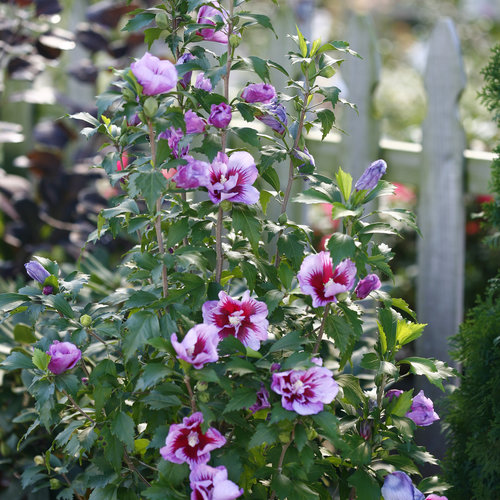
Purple Pillar® Rose of Sharon is a shrub selection of Hibiscus syriacus. This reference combines the breeder’s dimensions, exposure and seasonal information with a practical placement sketch. It describes the named plant; it does not indicate that Blessed Blooms currently stocks or ships it.
Plant identity and growing facts
| Botanical identity | Hibiscus syriacus; Purple Pillar® |
|---|---|
| Plant type | Shrub |
| Light | Sun |
| Height | 120 - 192 Inches |
| Spread | 48 - 60 Inches |
| Spacing | 48 - 60 Inches |
| Hardiness zones | 5a–9b |
| Flower color | Purple |
| Foliage | Green |
| Seasonal interest | Summer through Fall |
| Water category | Low |
| Habit | Upright |
| Flowering wood | New Wood |
Reference: Purple Pillar ® Rose of Sharon Hibiscus syriacus — Proven Winners, checked 2026-10-31. Dimensions describe an established plant rather than the size of a pot offered for sale.
Does it fit your growing space?
The published exposure is Sun, with a mature height of 120 - 192 Inches and spread of 48 - 60 Inches. Its published height is substantially greater than its width, so consider the view behind it and its vertical relationship to neighboring plants. Check the light at the actual planting spot, including shade cast by taller plants as they grow.
A spacing sketch for Purple Pillar®
Using the upper published mature width of 60 inches, 2 plants would occupy approximately 120 inches of a ten-foot run if their mature canopies just met. This is a scale illustration, not a planting prescription. It reserves the full mature width for each plant; paths, access and the breeder’s planting-distance recommendation may require more room. A mixed border needs space for its other plants as well.
Water, winter conditions and maintenance
The breeder’s water category is Low. Use it to compare this selection with neighboring plants; it is not a fixed watering interval. Check the root-zone moisture, drainage and weather when deciding whether to water. Its listed hardiness range is 5a–9b. Hardiness is a winter-cold reference, not a guarantee of performance in every soil or summer climate.
The breeder identifies the flowering wood as New Wood. Check that detail before pruning: a pruning routine borrowed from another Hibiscus can remove the stems intended to flower. Follow the linked cultivar instructions when choosing a pruning date.
“The narrow habit of Purple Pillar rose of Sharon means it creates few to no branches, so little…”
This short opening excerpt is from the breeder’s maintenance notes. Read the complete instructions for this exact selection before using fertilizer or changing a pruning routine.
Using Purple Pillar® in a landscape
The breeder describes its habit as upright. Its green foliage is part of its visual role, while the recorded seasonal interest is summer through fall. Compare the mature outline with the available bed width, sightlines and access around the planting. Repeat a selection for continuity only after checking that the location meets its light and water requirements.
Flowers and learning from home
For practice designing with cut flowers, explore the Online Hand-Tied Bouquet Workshop and flower-arranging ebook. The Online Courses page explains the options.
For a florist-designed gift, see the current Featured Bouquet and shipping details for eligible continental U.S. destinations. This plant reference does not describe the ingredients in the current bouquet.
Source and scope
Plant facts: Purple Pillar ® Rose of Sharon Hibiscus syriacus — Proven Winners. Researched 2026-10-31. The placement calculation and design prompts are editorial planning tools. No firsthand growing trial, current stock or guaranteed performance is claimed.