

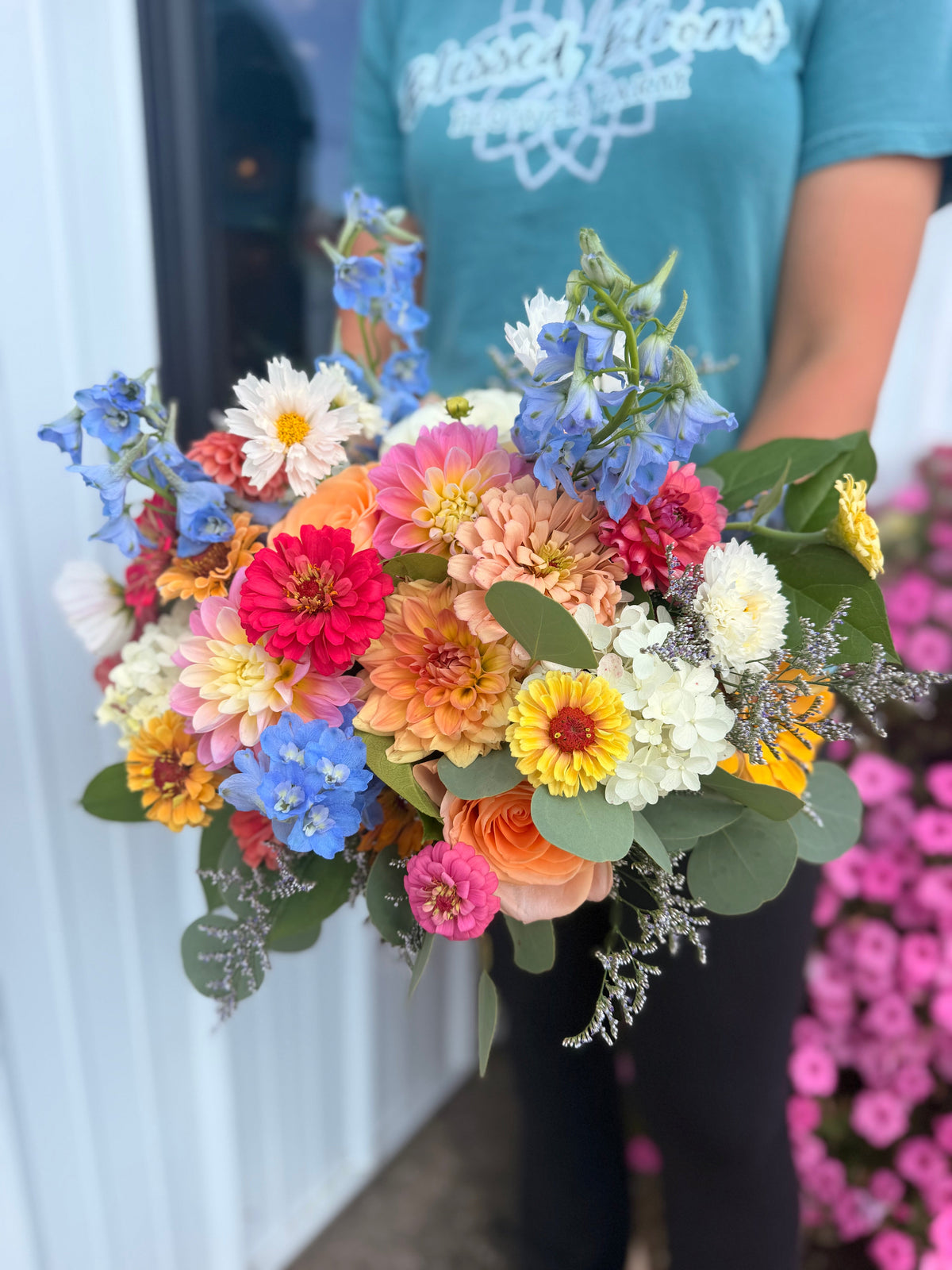
A balanced bouquet begins with a few different flower shapes, rather than a shopping list of specific varieties. Think about what each stem contributes: a flower that catches your eye, blooms that support it, texture between the larger shapes and greenery around the edges.
This approach lets you work with what is fresh and available. It also makes it easier to substitute flowers when the bouquet in your inspiration photo includes something out of season.
Choose your focal flowers first
Focal flowers are the blooms you want people to notice. Their size, shape or color gives the bouquet a point of interest. A rose, dahlia or sunflower can play that role, depending on the arrangement. Pick a small number of favorites, then choose the other stems to complement them.
Check that the blooms and foliage look fresh and undamaged. A beautiful color cannot make up for a flower already fading. If you are buying flowers, look at the whole bunch rather than only the largest flower at the front.
Add supporting blooms
Supporting flowers sit around and between the focal blooms. Try smaller shapes or a softer version of your main color. Repeat a few colors through the bouquet to help it feel connected. You do not need a different variety for every stem.
For a first practice bouquet, a limited palette is easier to assess. Pink with peach feels different from pink with deep burgundy; choose the combination you enjoy rather than trying to follow a rigid rule.
Use texture and line with intention
Small sprays and airy flowers can soften the spaces between larger blooms. Taller, narrower stems create a sense of movement. Add them a little at a time, checking whether you can still see the focal flowers. Leaving some space can be more effective than adding another handful.
Let greenery support the shape
Greenery can frame the flowers and connect different colors. Notice leaf size as well as color: broad leaves create a different effect from small, light foliage. Remove leaves from the part of each stem that will sit in water.
Judge balance by what you see
Balance is about visual weight, not making both sides identical. A large dark bloom may draw more attention than several small pale ones. Rotate your bouquet and ask which part catches your eye first. Adjust placement or height before assuming you need more flowers.
Use a handful you can comfortably hold while learning. There is no universal stem count for every bouquet; the size of the blooms, the amount of greenery and the shape you want all make a difference.
Prepare, build and practice
Place fresh stems in water and let them hydrate before you start. Gather your basic flower arranging tools, then use our step-by-step hand-tied bouquet guide to begin building.
For a demonstration of flower roles and the spiral method, join Alyssa’s Online Hand-Tied Bouquet Workshop. The beginner-friendly course covers preparation, building, wrapping and care, with nine videos and five printable guides. You can pause and replay the lessons whenever you like. Flowers and supplies are not included.
Explore the full range of online floral design learning options, including our beginner ebook.
Further reading: University of Minnesota Extension: flower selection and design principles.
Share:
How to Make a Hand-Tied Bouquet for Beginners